EA License (CBDU596771)
EA License (CBDU596771)

Rachel writes practical guides on skip hire, waste removal, and responsible disposal in the UK. She explains what you can legally put in a skip, how to handle restricted waste, and what it really costs. Her goal is to give clear, up-to-date advice so households and trades stay compliant and avoid fines.
Reviewed by: Skip Hire Team Waste Compliance Manager | Upper Tier Waste Broker Licence CBDU596771
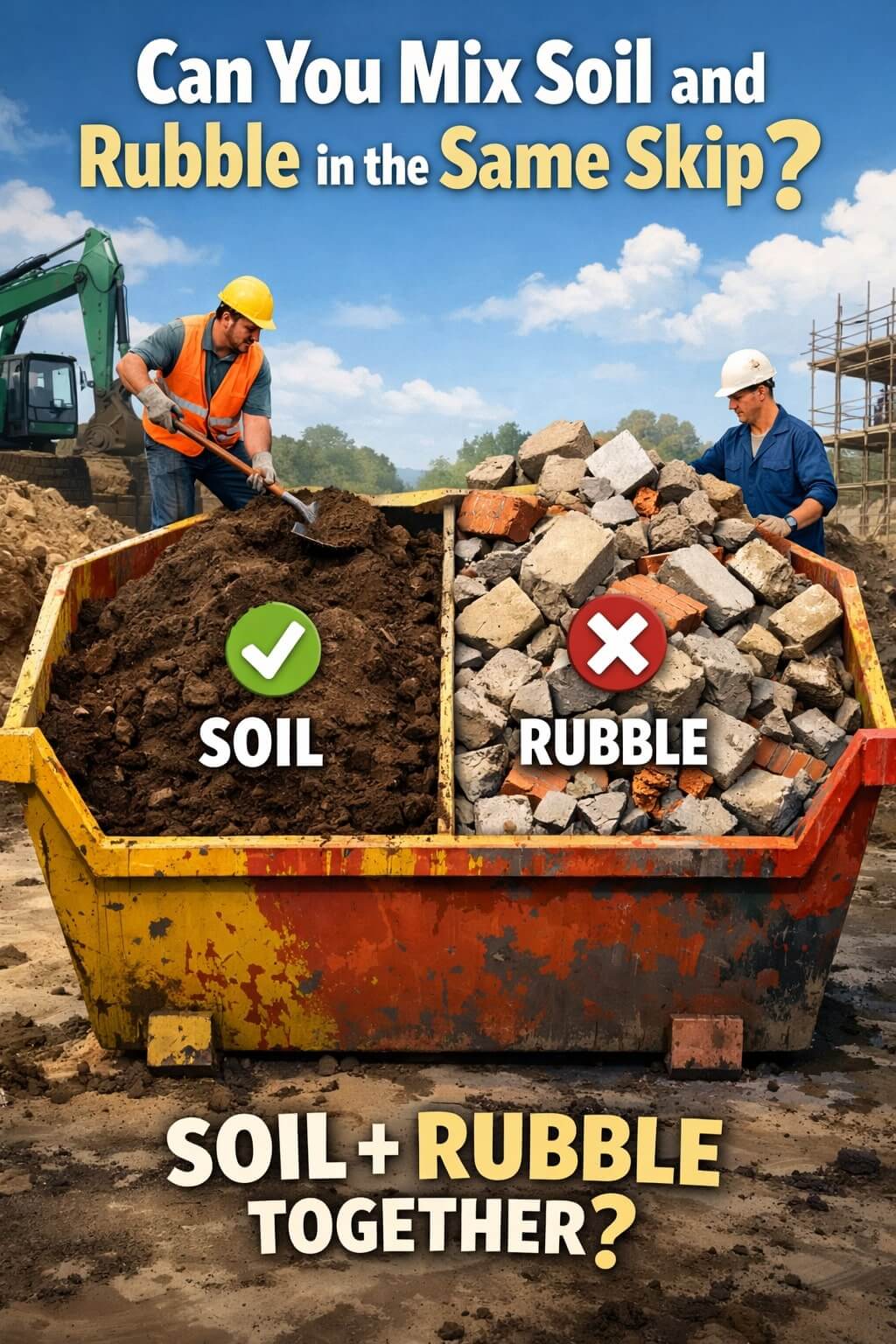
Both types of waste can go in a mixed waste skip. Many skip providers allow mixed inert skips, but some prefer separate skips because when soil and rubble are combined, the skip load becomes heavy.
Some companies offer mixed waste skips, but for that, you have to pay more as compared to clean soil alone.
Platforms like Skip Hire Team offer transparent guidance on waste types and weight limits and are available 24/7 to help customers avoid booking the wrong skip.
Before deciding whether soil and rubble can go in the same skip, it is important to understand what types of materials they are:
Once soil is mixed with turf, rubble, or bricks, it is classed as non-clean inert waste. This makes the handling process difficult, and can result in additional charges.
However, soil and rubble are both heavy, and when both large volumes are combined, your safe weight limits are easily crossed.
Always confirm this with your provider at the time of booking.
Recycling facilities process soil and rubble differently, so mixing rubble in a soil-only skip can result in contamination fees. Mixing may not be allowed or may cost more in cases such as:
Rubble and soil can quickly exceed permitted transport limits, leading to extra disposal fees or skip rejection.
Check waste restrictions beforehand to avoid any penalties, refusal, or other charges. The skip hire team will help you choose the right skip.
A skip can be rejected, even if it is filled only to the fill line, because soil and rubble are extremely heavy. In many cases, a 6-yard skip filled with soil can weigh 6–8 tonnes, which is close to or over transport limits.
This means a skip may need to be only half-filled to stay within legal weight limits.
Precautions to take:
There is no need to be confused. Hiring one skip or two depends on the complexity of your project. The table below will help you to compare and decide wisely:
|
Option
|
Best for
|
Why it works
|
Key considerations
|
|---|---|---|---|
|
One mixed skip
|
Small projects
|
Convenient and cost-effective for small amounts of soil and rubble
|
Must stay within weight limits and get provider approval
|
|
Two separate skips
|
Large projects
|
Easier recycling and reduced risk of overloading
|
Higher upfront cost but fewer penalties or delays
|
Be clear whether you have soil, rubble, or a combination of both.
Providing accurate details allows the provider to recommend the correct skip and avoid compliance issues later.
“Does this skip allow a combined inert load?”
Understanding the maximum permitted weight helps prevent rejection and additional charges.
An email or message confirming waste types protects you from disputes or contamination fees.
Skip Hire Team with vetted partners clearly state weight limits, approved waste types, and any potential fees in advance, helping customers avoid unexpected costs.
There is a high chance of skip rejection, or you may be charged additional fees.
Yes, but only if your provider allows it and the soil is clean.
It depends on your project. If it is small, one skip is enough and cheaper, but if you talk about large projects, two different skips reduce delays and penalties.
© 2026 Skip Hire Team. All rights reserved. Upper Tier Waste Broker: CBDU596771, Company Number: 15212663 VAT Number: 457394064